5 Pillars of a Crypto Plan for the Next Cycle
Want articles like this for your own video to promote it on YouTube and Google? Order them through the Telegram bot @sat_sit_bot. Articles with your video embedded are written and posted by the bot itself — on popular topical sites (no ads). Free trial — 50 articles.
· based on the channel Brian Jung
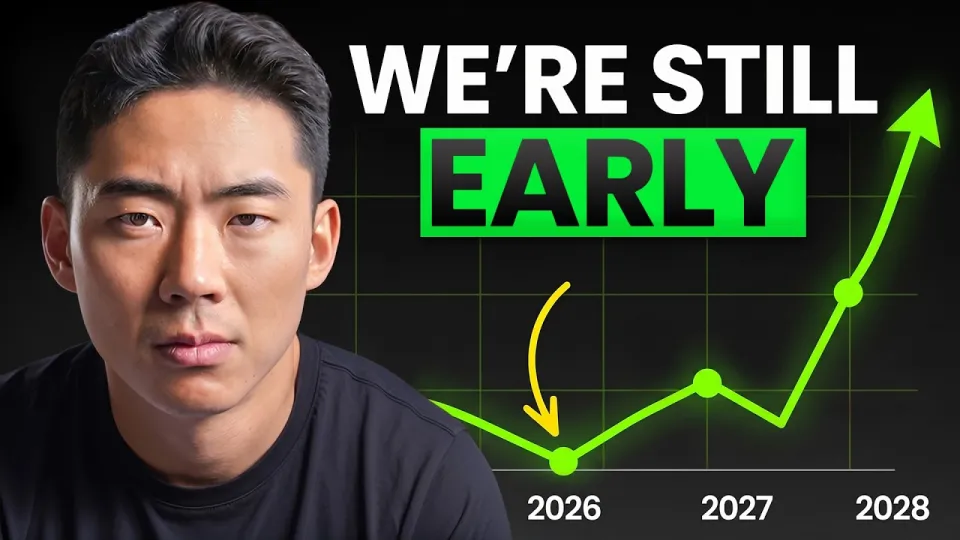
A crypto plan for the next cycle is a written set of rules covering what you buy, how much you allocate, when you take profit and what would make you exit — not a list of coins to hold blindly. Brian Jung's breakdown, published in October 2026, argues that the winners will be investors who define these rules before the mania returns, and he packages his own framework through the Kaizen Pro waitlist alongside a free market report newsletter.
Why the bull case for crypto still holds
The core argument is that crypto's demand base has changed structurally, not just sentimentally. Spot Bitcoin ETFs turned a niche asset into something allocators can buy inside standard brokerage and retirement accounts, which means flows now arrive from advisors and institutions rather than only from retail traders on exchanges. Add stablecoin settlement volumes that keep growing, tokenized treasuries and money-market products on public chains, and layer-2 networks that made transactions cheap enough for everyday use, and the asset class has real usage to point at.
A second leg is regulatory clarity. Rules that define which tokens are securities, how custodians operate and how exchanges register remove the biggest excuse institutions have for staying away. One recurring counterpoint among viewers is that clarity arriving through banks is not necessarily good news, because it can push custody and control toward the same intermediaries crypto was built to avoid. That is a fair tension: regulation unlocks capital but can also concentrate power, and the two effects can coexist.
The narratives driving the next cycle
Five themes keep coming up when investors map the next leg of the market.
- Bitcoin as institutional collateral. ETF inflows, corporate treasury holdings and the possibility of Bitcoin being pledged in traditional finance make BTC the gateway asset for most new capital.
- Ethereum and Solana as settlement infrastructure. Fees, staking yields and developer activity are the metrics that separate real networks from marketing.
- Consumer applications. Payments, gaming and social apps are where non-crypto users actually arrive; SUI is one chain that gets mentioned in this context for its consumer-focused design.
- Real yield and tokenized assets. Products that pay returns from actual revenue, not emissions, attract capital that would otherwise sit in bonds.
- AI plus crypto. Payments, compute marketplaces and verification for AI agents are early but attract disproportionate developer attention.
How to build your own crypto plan
Start with allocation, because it determines outcomes more than coin selection does. A common structure is a core of Bitcoin and Ethereum sized so that a 50–70% drawdown does not force you to sell, plus a smaller satellite sleeve for higher-risk narratives. Many investors run something like 50% in large caps and 50% across altcoins, but that split only works if the altcoin half is money you can genuinely afford to lose.
Then write down entry and exit rules in advance. Decide what percentage of the portfolio you will take off the table at each multiple, whether you rebalance quarterly, and which on-chain or price signals would tell you the thesis is broken. A plan that exists only in your head tends to dissolve the moment a position doubles.
Lessons from the last cycle's losses
The most common complaint about bullish crypto content is that the same optimism was on offer in 2025, and plenty of people ended the year down. That is not an argument against having a plan — it is an argument for one that includes risk control. Position sizing, avoiding leverage on illiquid altcoins, and taking partial profits on the way up are what separate survivors from spectators.
A second lesson is patience about timing. Nobody knows whether a cycle top lands in 2027, 2028 or 2029, and anyone who states a date with confidence is guessing. Build a plan that works across several years, review it when the facts change, and treat every forecast — including the ones in this breakdown — as a scenario rather than a schedule.
Questions investors ask before committing
Skepticism is healthy and shows up in predictable forms: is this just permabull content, what happens if regulation goes the wrong way, and how much should go into altcoins at all. The honest answers are that directional calls are probabilistic, that regulatory setbacks can cut both ways, and that altcoin exposure should scale with how much volatility you can tolerate without panic selling. A useful test is to imagine the portfolio down 60% and ask whether you would add, hold or exit — the answer tells you whether your sizing is right.
All links from the breakdown
- Kaizen Pro waitlist: https://whop.com/kaizen/products/kaizen-pro/
- Free crypto market report newsletter: https://newsletter.kaizen.gg/subscribe
- X (Twitter): https://twitter.com/thebrianjung
- Instagram: https://www.instagram.com/creditbrian
- Risks and disclaimers document: https://docs.google.com/document/d/1WIgz8SB1mMzke0uvLt_6zXmSbqLL4gL5VgpDnVEk5m8/edit?usp=sharing
Bottom line
The plan that makes money in crypto is boring on paper: a core of Bitcoin and Ethereum, a disciplined satellite allocation, pre-written profit-taking levels and a written thesis for every position. Narratives like tokenization, consumer apps and AI agents will rotate, but the investors who capture them are the ones who sized positions so they could stay in the game through drawdowns. Brian Jung's breakdown is a useful starting template for that structure, provided you adapt it to your own risk tolerance rather than copying allocations wholesale. If you want his fuller research process, the Kaizen Pro waitlist is where he publishes it.
Key takeaways
- Brian Jung lays out a multi-part plan for building crypto wealth across the next market cycle rather than chasing a single trade.
- The bullish case rests on ETF-driven institutional demand, regulatory clarity and real revenue-generating applications.
- Narratives he highlights include Bitcoin as institutional collateral, Ethereum and Solana infrastructure, and consumer apps such as SUI.
- Position sizing and profit-taking rules matter more than picking the single best coin.
- Regulatory clarity being rejected is not automatically bearish for crypto, since banks gaining control is a separate risk.
Questions & answers
Is it realistic to expect millions from crypto in the next cycle?
Only with a defined plan and controlled risk. Outsized returns require concentrated positions in early narratives, but the same concentration can wipe out an account. Most realistic paths combine a large-cap core, a smaller high-risk sleeve and disciplined profit-taking rather than one lucky trade.
Should regulatory clarity worry crypto investors?
It cuts both ways. Clear rules bring institutional capital and better custody, but if banks and large intermediaries dominate, the decentralization argument weakens. Investors should watch who controls custody and settlement, not just whether the rules are friendly.
How much of a portfolio should go into altcoins?
There is no universal number; it depends on your time horizon and tolerance for 70%+ drawdowns. A common approach is a majority in Bitcoin and Ethereum with a satellite allocation to altcoins, sized so a severe decline does not force you to sell at the bottom.
Why did so many people lose money despite bullish forecasts?
Because forecasts rarely include exit rules. Investors who bought late, used leverage or held through a full drawdown without taking profits gave back gains. Position sizing and pre-planned profit-taking matter more than predicting the exact top.
Source: my plan to make millions in crypto 2027 · Markdown version